Campaigns of Montrose – Review
Campaigns of Montrose: A Year of Living Dangerously, 1644–1645 is a two-player, card-driven board wargame designed by Brendan Whyte and published by Decision Games. It covers Montrose’s Royalist campaign in Scotland from August/September 1644 to April/May 1646, when Charles I surrendered. The game is part of the Hand of Destiny series of introductory historical wargames, built around a compact map, a short ruleset, and a relatively small number of counters.
Rather than attempting to reproduce every event of the campaign, Campaigns of Montrose focuses on a few key dynamics: Montrose’s need to move quickly and keep winning, the ability of his relatively small army to defeat larger Covenanter forces and the difficulty of keeping his Scottish following together once a battle is over. The result is a compact design with an ambitious subject. The central question is whether a game with such a small footprint and relatively light rules can convey the tension, uncertainty, and relentless pace of Montrose’s remarkable campaign.
What You’ll Find Here
The Historical Context
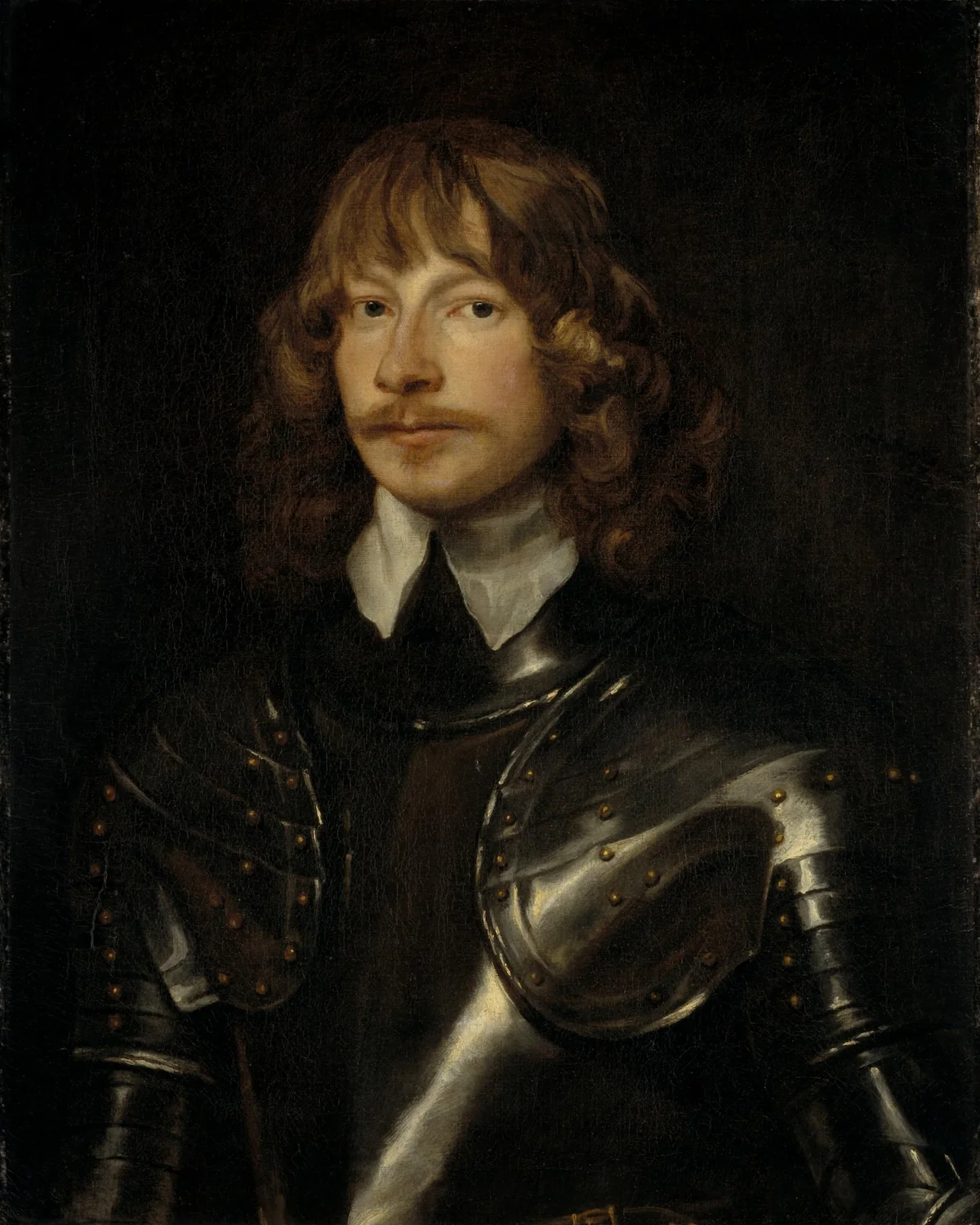
Campaigns of Montrose recreates Montrose’s campaign within the wider Wars of the Three Kingdoms, the interconnected conflicts that engulfed England, Scotland, and Ireland during the 1640s. By 1643, the Scottish Covenanters had allied themselves with the English Parliament against Charles I, committing Scottish troops to the war south of the border. Montrose, who had originally supported the Covenanter cause, broke with them and switched to the Royalist side. When Charles appointed Montrose his lieutenant-general in Scotland, the task was daunting: the Covenanters controlled almost the entire country, while Montrose had to build a Royalist rising without an established army of his own. A successful campaign could also have consequences beyond Scotland by forcing the Covenanters to recall troops from England and easing pressure on the Royalist war effort there.
Montrose’s campaign reached its dramatic climax at Philiphaugh in September 1645, where his forces suffered a decisive defeat. The game, however, does not end there, as its turn sequence continues through the final phase of the conflict, ending in April/May 1646 with the surrender of Charles I. This broader strategic framework is important to the way the game works: Montrose is not simply trying to win individual battles: he must turn a precarious rebellion into a sustained military challenge before the Covenanters can bring their superior resources to bear, while the eventual collapse of the wider Royalist cause remains the ultimate historical backdrop.
Want to know what really happened behind the game? Follow Montrose’s remarkable campaign from his first victories to the final disaster at Philiphaugh in Montrose’s Campaign, 1644–45 – The Complete Guide.
What the Game Is Trying to Capture
The game does not attempt to reproduce the campaign battle by battle. Instead, its design concentrates on the operational problems that made Montrose’s campaign so distinctive. The Royalists have to move quickly, accumulate victories and make the most of a relatively small but effective force. Their Highland and Irish troops can achieve impressive battlefield results, but the army is also fragile: Scottish warriors may return home after battles, reflecting the importance of clan loyalties. The Covenanters have the opposite problem. Their forces are more numerous, but they begin scattered across Scotland and must coordinate their movements to contain an opponent who can move rapidly and choose when to fight. This asymmetry is central to the design. The two sides are not simply different versions of the same army; they are confronted with different strategic problems.
The Game
Map & Cards
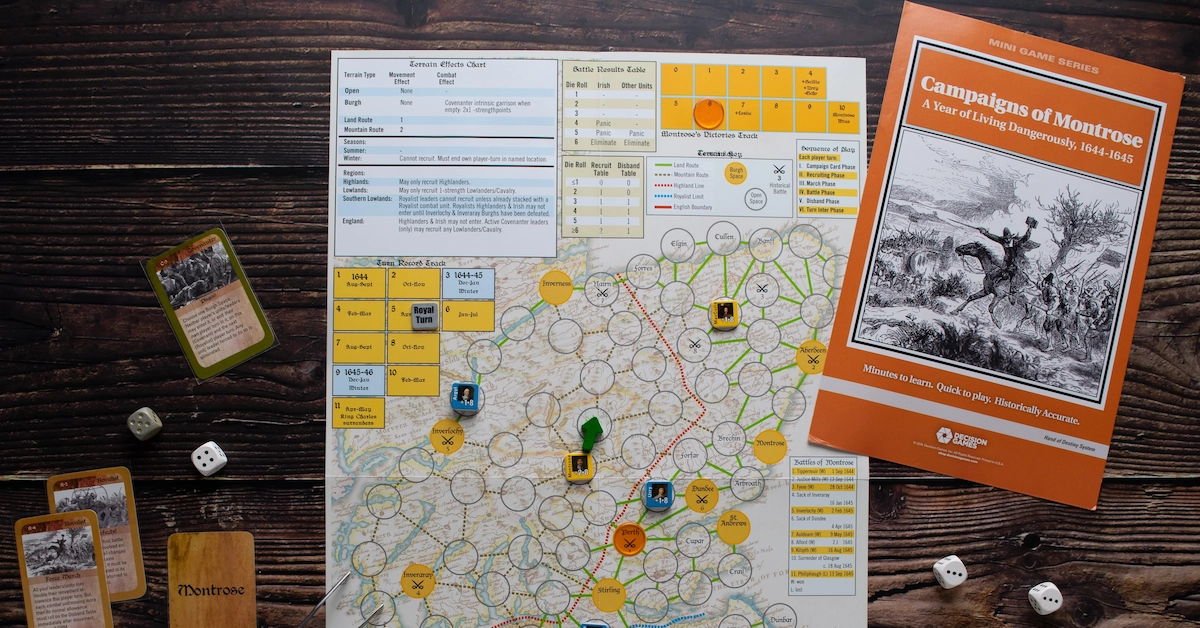
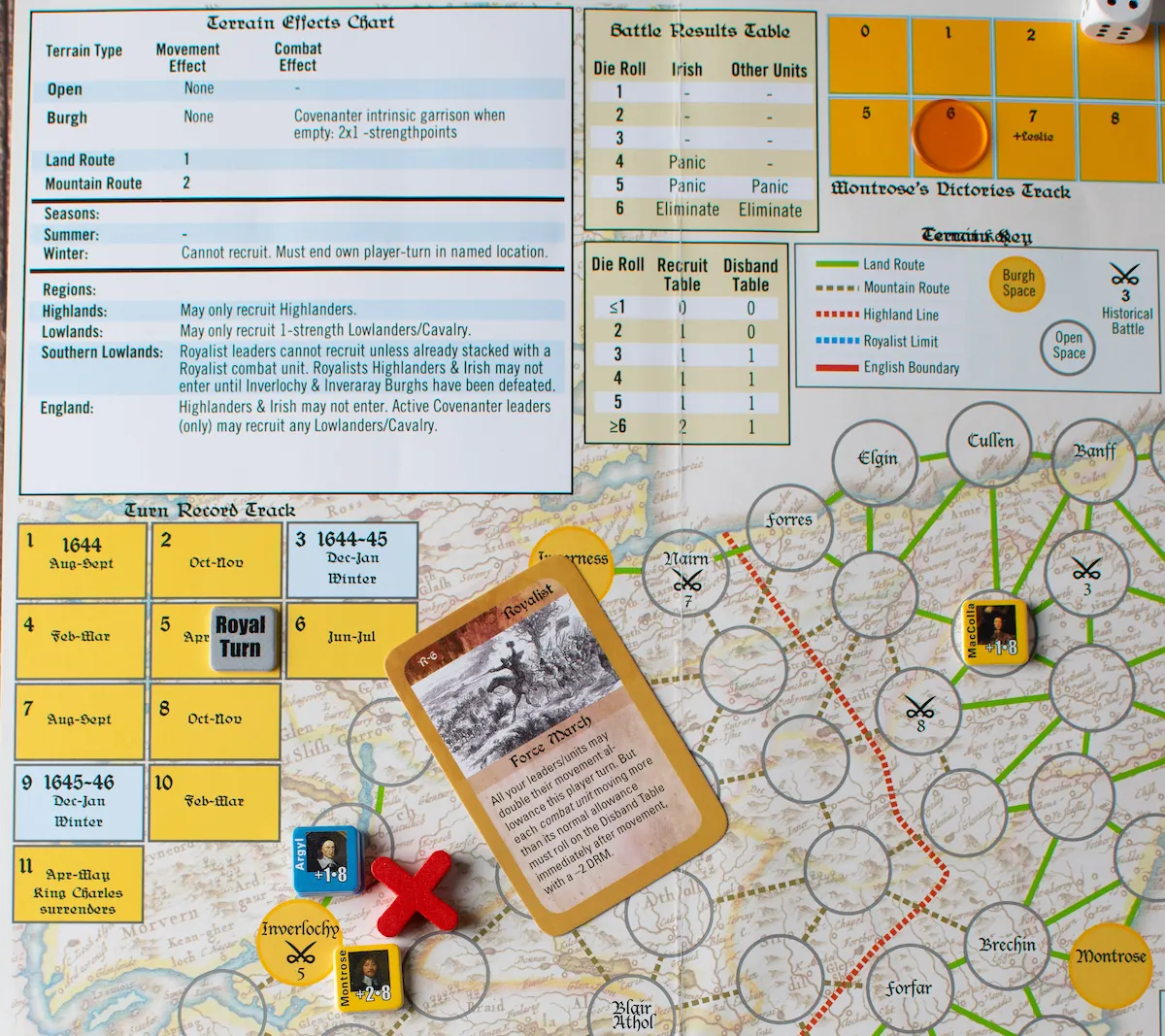
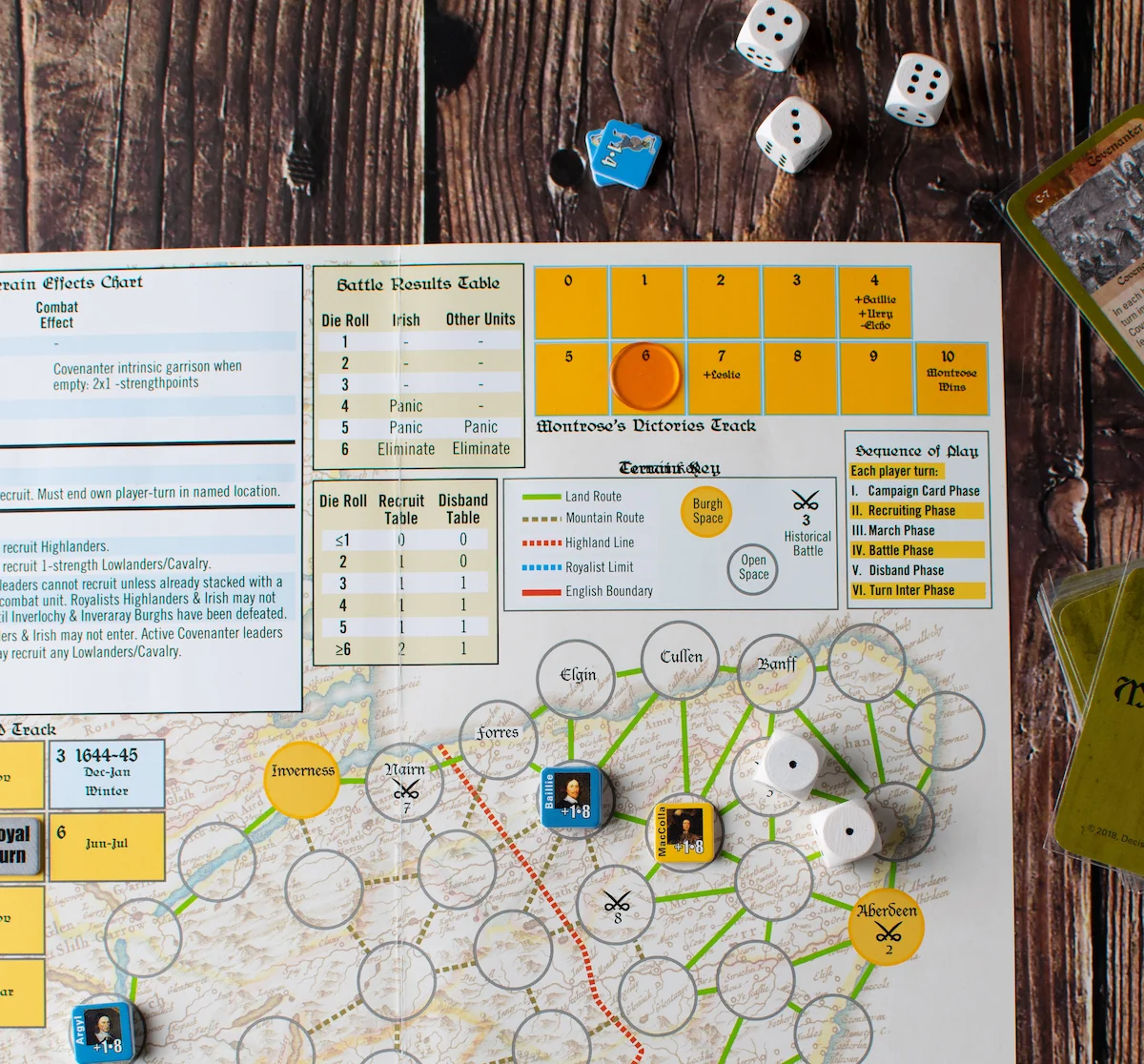
The 11×17 inch (28 × 43 cm) map is one of the game’s most attractive components. Its artwork deliberately evokes the appearance of period maps, giving the game an appropriate historical character without compromising its practical function. All the tables needed during play are printed directly on the map, while the Burghs relevant to the victory conditions are clearly marked. The map is divided into geographical areas that also determine movement. The main drawback is readability: some place names use an elaborate Gothic-style typeface that looks suitably period-inspired but can be difficult to read at a glance.
The cards are probably the weakest component from a practical standpoint. They are relatively small, and the font is correspondingly tiny, making some text difficult to read without good eyesight. The physical quality is better as the cards feel pleasant in the hand and are printed on reasonably thick stock, so the main criticism is readability rather than durability or production quality.
Rulebook and Player Aids
The rulebook is very short, as might be expected from a game of this type, but it is well structured. It covers the basic rules, advanced and optional rules and includes a play example. There are no scenarios, but the game’s campaign structure makes them unnecessary. Likewise, no separate player aids are provided, although this is hardly an omission: most of the information needed during play is already printed on the map. One minor omission is that the game does not include dice. I fixed it by adding two dice in different colours for determining tactical superiority during combat, together with five dice of the same colour for assigning hits. Even with these additions, everything fits comfortably into the original ziplock packaging, although I eventually opted for a different storage solution.
Counters
The 40 counters are thin and their information has been reduced to the essentials. In practice, however, they provide everything needed without unnecessary visual clutter. The silhouettes used for the different troop types are a particularly nice touch, giving the counters some visual character. The commander counters also feature portraits, although there are a couple of instances where commanders’ names are not reproduced correctly.

Rules & System
Campaigns of Montrose has a gentle learning curve, largely because of its relatively small number of rules and clearly structured sequence of play. Each turn follows a fixed sequence, printed directly on the map: Campaign Card Phase, Recruitment Phase, March Phase, Battle Phase, Disband Phase, and Interphase before play passes to the other side. This makes the game easy to follow and keeps the focus on decisions rather than procedural bookkeeping. Movement uses a point-to-point system, with different movement costs for clear and mountain terrain. Combat is similarly straightforward once tactical superiority has been determined. Irish units use a more punishing hit table, giving them an important battlefield advantage. The advanced and optional rules add flexibility without fundamentally changing the character of the game but they are useful to increase historical realism, address balance or reduce the advantage of a more experienced player.
Victory Conditions
The victory conditions are simple to understand but demanding to achieve. The Royalists have three possible paths to victory: they can win ten battles against Burghs or Covenanter forces; reach England with at least four Royalist units or eliminate every Covenanter commander and unit from the map. The Covenanters, meanwhile, must eliminate Montrose or prevent him from achieving ten victories by the final turn. These conditions create sharply different strategic priorities. The Royalists must build a sufficient tally of victories while preserving enough of their force to pursue their longer-term objectives. The Covenanters, by contrast, need to contain Montrose and prevent his momentum from becoming impossible to stop.
Historical Simulation
The point-to-point map, combined with different movement costs for clear and mountain terrain, reflects the difficulties of moving troops through a country where mountains, narrow routes, and poor roads could restrict military operations. Winter turns reinforce this effect: recruitment is restricted and units must end their movement in a named location, creating a noticeable slowdown in operations. Montrose’s army also has a way to overcome these limitations: certain cards allow his units to double their movement allowance, although doing so carries the risk of desertion. This is an effective abstraction of one of the campaign’s defining characteristics: Montrose’s ability to move his army extraordinary distances in remarkably short periods and appear where his opponents least expected him. The most striking historical parallel is Inverlochy, where a daring winter march produced precisely the kind of operational surprise that the game allows the Royalist player to pursue.
The system also captures the difficulty of keeping Montrose’s army together. After every battle, whether won or lost, recruited units (particularly Highlanders) must pass a check during the Disband Phase or return home. This reflects the importance of clan loyalties and the limited permanence of Montrose’s Highland following. The result is an interesting tension between success and sustainability: winning battles is essential but victory does not necessarily make the Royalist army stronger. Moreover, rather than reducing battle to a simple comparison of numbers, the system makes tactical superiority important in determining which side strikes first.
The game’s alternative victory conditions also leave room for outcomes that did not occur historically. One Royalist victory condition requires Montrose to reach England with at least four Lowland infantry and/or cavalry units. Although historically plausible as an objective, this is extremely difficult to achieve in play. The Covenanters have a clear numerical advantage and can coordinate their movements to block the Royalists’ routes south. Historically, after his successive victories, Montrose might conceivably have attempted to push farther south. Reaching England with a substantial force, however, would have presented a very different strategic challenge and could have prompted a major concentration of forces against him, as the dispatch of David Leslie and his veteran cavalry historically demonstrated.
This is one of the game’s more interesting compromises between historical plausibility and alternative outcomes. The victory condition allows the player to explore a possibility that Montrose might have pursued, while the Covenanters’ numerical superiority imposes substantial constraints on how easily it can be achieved. Overall, the game maintains a convincing degree of historical plausibility without attempting to prevent improbable outcomes. That is an appropriate balance for a historical simulation rather than a reconstruction of events.

What the Simulation Gets Right
Taken as a whole, Campaigns of Montrose does a good job of identifying the central pressures of the campaign and turning them into problems the players must actually manage. Its most successful abstraction is perhaps the relationship between movement, recruitment, victory, and disbanding. The Royalists need to keep moving and winning, but every battle can also threaten the cohesion of the army that makes those victories possible. This creates a useful representation of the precarious nature of Montrose’s military position. The sieges of the Burghs are also handled convincingly. Capturing them requires both time and a substantial commitment of troops, while a “Panicked” result does not affect the besieged forces. This prevents sieges from becoming an easy alternative to defeating Covenanter armies in the field and gives them a distinctly different strategic character. The game therefore succeeds not because it reproduces every detail of the campaign, but because several of its most important historical pressures are transformed into meaningful gameplay decisions.
Where the Simulation Falls Short
The main aspect that I feel the game does not simulate particularly well is fog of war. Players can freely inspect the contents of opposing stacks, removing much of the uncertainty that would naturally surround the strength and composition of an enemy force. Knowing exactly what is waiting at the end of a march inevitably reduces some of the tension that otherwise characterises the campaign. This is not, however, a major flaw as it can be addressed quite easily with a simple house rule preventing players from inspecting an opponent’s stack until combat takes place. With this adjustment, the game creates a much stronger sense of uncertainty without requiring any changes to its core system.
Gameplay Experience
Decision-Making
The commanders on both sides face important, but very different, decisions. The Royalists need to move quickly, recruit whenever possible, and choose their battles carefully. Ideally, they want to attack when they can secure a numerical or tactical advantage, but waiting too long can be just as dangerous because the Covenanters have time on their side. The Covenanters can afford a more patient approach. They can attempt to contain Montrose by concentrating their forces and denying him opportunities, while avoiding the risk of allowing isolated armies to be defeated one by one.
Tension & Uncertainty
This is where the game’s relatively simple mechanics produce much of their impact. The Royalists are constantly trying to accumulate the victories they need while avoiding situations in which their fragile army can be destroyed or dispersed. With the house rule described above, approaching an enemy force becomes particularly tense because its strength remains unknown until combat begins. The result is a recurring dilemma: commit to the attack and risk discovering that the enemy is stronger than expected, or keep moving and give the Covenanters another opportunity to close the net.
When the Dice Turn Against You
Commander casualties are highly unlikely, occurring only when a roll of two dice produces double ones. Nevertheless, I have actually lost both Argyll and McColla in separate games. This caused serious problems, particularly when playing the Royalists, since McColla is one of only two Royalist commanders besides Montrose. It was a useful reminder that even extremely unlikely events can have a major impact when the number of key commanders is so small. It also reinforces an important consideration during play: approaching battles with adequate forces is not simply about maximising combat strength. Losing Montrose, in particular, can result in an immediate Royalist defeat.
Player Interaction
The game’s asymmetry works particularly well in two-player play. At first glance, the Royalist player appears to face the greater challenge, while the Covenanter player might seem to be concerned mainly with containing Montrose. In practice, however, the Covenanter has plenty of difficult decisions to make and cannot simply wait for the opponent to make a mistake. The experience often feels like a game of chess, with positioning and timing playing a major role and individual decisions having consequences that can extend well beyond the immediate battle.
Replayability
There are no scenarios and the setup remains fixed from game to game. Nevertheless, my games have developed in noticeably different ways. The combination of player decisions, recruitment, combat results, disband and card effects can produce unexpected situations even when both sides begin with a clear plan. Strategies therefore have to adapt as the campaign unfolds, giving the game a degree of replayability that does not depend on variable scenarios or setup.
Playtime & Solo Play
Setup and teardown are both extremely quick, thanks in part to the relatively small number of counters. Playing time can vary depending on the players’ strategic choices, but my games have generally lasted between 90 and 180 minutes. I have also tried the game solo and found the experience enjoyable and, to some extent, challenging even without a human opponent.
Who Is This Game For?
Campaigns of Montrose is likely to appeal to players looking for a relatively light historical wargame that is quick to set up and play, while still offering meaningful decisions, a genuine challenge and a strong sense of historical grounding. Players looking for greater strategic depth, a wider range of choices and events or a larger number of units on the map may find the experience somewhat limited.
Strengths & Weaknesses
What Works
🟢 Attractive map and counter artwork
🟢 Challenging gameplay despite the light ruleset
🟢 Different strategic experiences for the two sides
🟢 Good replayability
What Could Be Better
🔴 Small font on the map and cards
🔴 No fog of war in the standard rules
Storage
The game comes packaged in ziplock bags. I eventually bought a small plastic storage box and additional bags to keep the components better organised.
Final Verdict
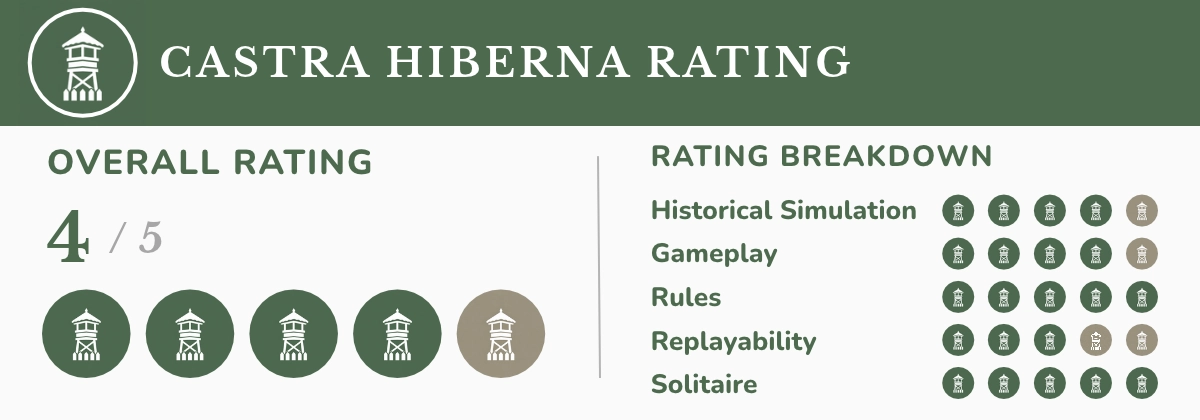
In conclusion, the game accomplishes a great deal with a small number of counters and a short rulebook. It is a fluid and challenging game in which even careful planning can be disrupted by an unexpected turn of events, forcing players to adapt rather than simply follow a predetermined strategy.
One of its greatest strengths is the way it creates a constant sense of urgency without requiring a complicated ruleset. Montrose’s campaign feels precarious: there is rarely enough time to execute the perfect plan, while the Covenanters face constant pressure to catch him before his speed and mobility allow him to slip away and undermine their efforts to contain him.
Overall, Campaigns of Montrose: A Year of Living Dangerously, 1644–1645 proved to be an engaging and thoroughly enjoyable game. Its combination of accessibility, meaningful decisions and uncertainty makes it a particularly satisfying example of how a relatively light historical wargame can create a compelling campaign experience.