Montrose’s Campaign 1644-45 – The Complete Guide
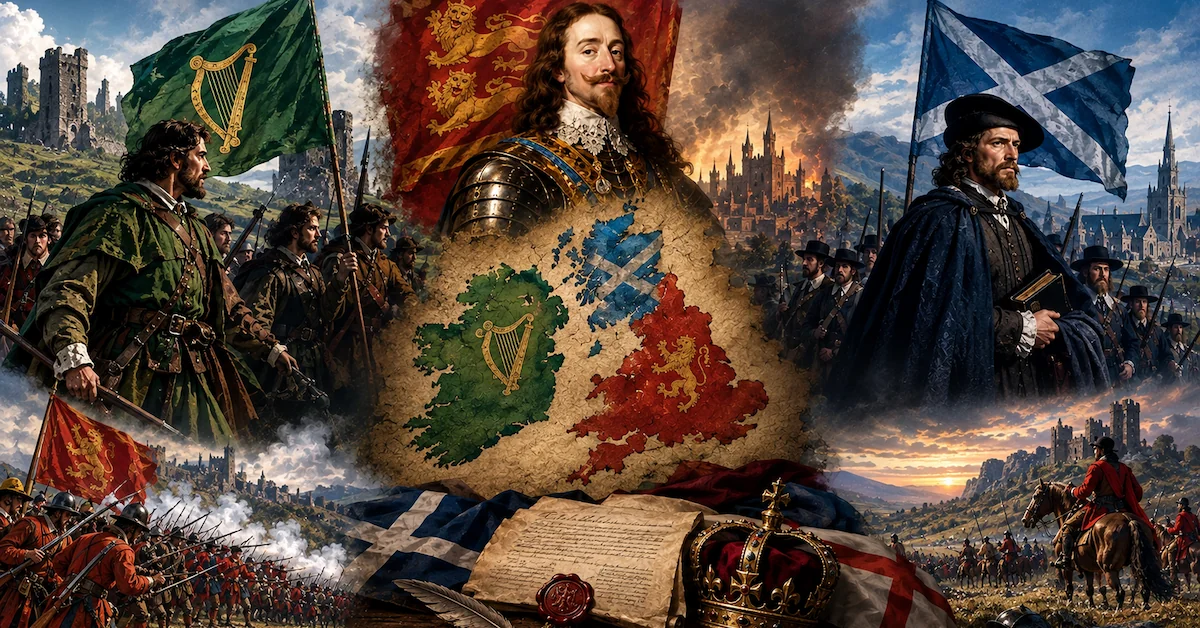
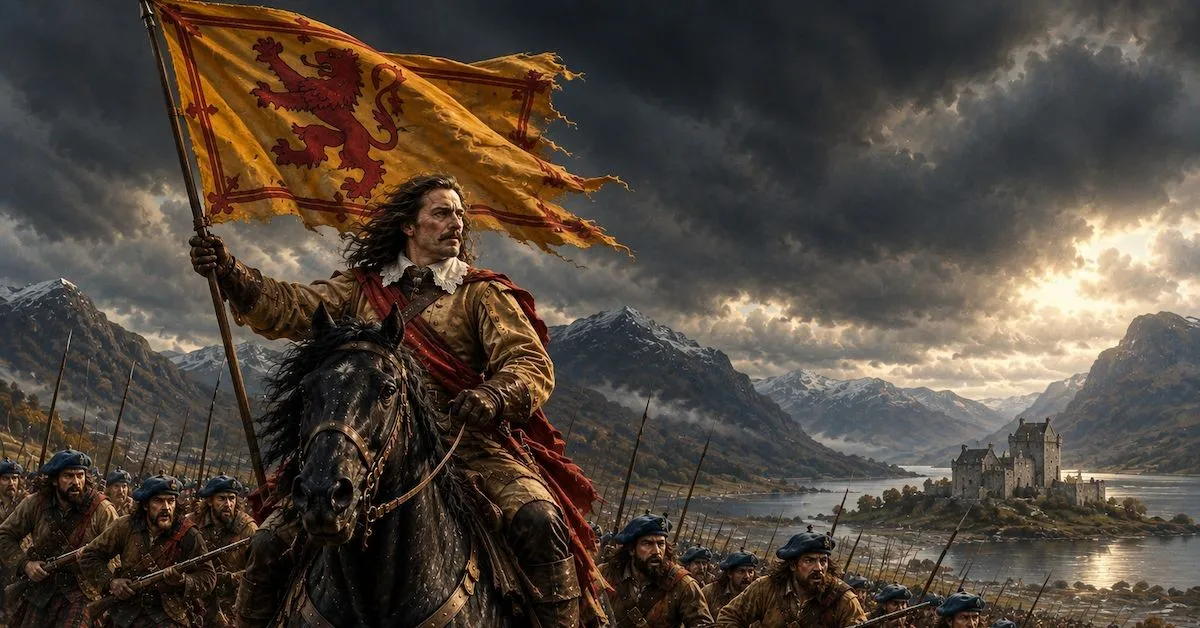
Between September 1644 and September 1645, James Graham, Marquess of Montrose, fought seven pitched battles across Scotland, won six of them against consistently larger forces, and briefly put the entire country under Royalist control — before losing everything in a matter of weeks. It’s one of the most dramatic and most studied campaigns of the Wars of the Three Kingdoms, and this guide covers all of it: who Montrose was, why the war happened, how each battle played out, and how the campaign has since found a second life on the tabletop.
Use the sections below to jump to what you’re looking for, or read straight through for the full picture.
What You’ll Find Here
Who Was Montrose?
Montrose didn’t start out as a Royalist. He was one of the original signatories of the Scottish National Covenant of 1638, standing alongside the very men he would later fight. He broke with them in 1643, convinced that the Covenanter cause had stopped being a defense of Scottish liberties and had become a vehicle for the personal power of a handful of nobles — chief among them Archibald Campbell, Marquess of Argyll.
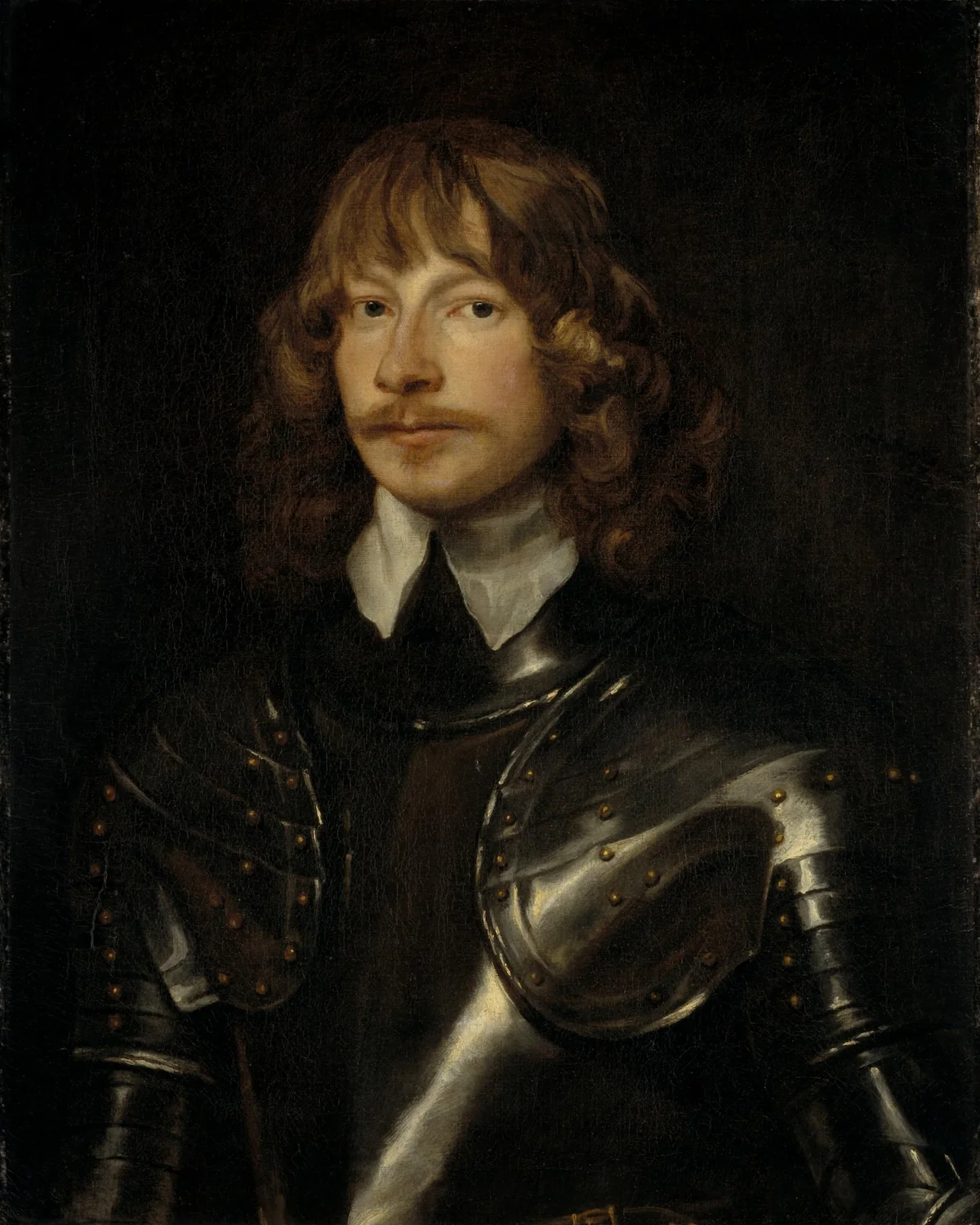
Charles I made him his lieutenant-general in Scotland, handing him a near-impossible brief: raise the country against a government that controlled almost every institution in it, with no army of his own and no guarantee anyone would answer the call.
Full profile: Who Was the Marquess of Montrose? (forthcoming)
The Political Context: The Wars of the Three Kingdoms
Montrose’s campaign didn’t happen in isolation. It was one theater of a much larger conflict spanning England, Scotland, and Ireland, triggered by Charles I’s attempts to impose religious uniformity across all three kingdoms and by the Scottish Covenanters’ 1643 alliance with the English Parliament against the king.
That alliance is the key to understanding why Charles needed Montrose in the first place: a Scottish rising in the king’s name could force the Covenanters to pull troops out of England, easing pressure on the Royalist war effort south of the border.
Full background: The Wars of the Three Kingdoms (forthcoming)
The Seven Battles, Battle by Battle
Tippermuir (1 September 1644) — Montrose’s first battle, won with a single volley and an immediate charge against a Covenanter militia twice his size.
Aberdeen (13 September 1644) — a battlefield win followed by a brutal sack of the city.
Inverlochy (2 February 1645) — a 36-mile winter march across the flanks of Ben Nevis, ending in the destruction of Argyll’s own clan army.
Auldearn (9 May 1645) — a battle won through deception, using a decoy flank to draw in a larger Covenanter force.
Alford (2 July 1645) — a hidden-strength ambush that cost Montrose one of his best cavalry commanders, Lord Gordon.
Kilsyth (15 August 1645) — Montrose’s greatest victory, and the moment Scotland came closest to full Royalist control.
Philiphaugh (13 September 1645) — the campaign’s final battle, and its collapse: a depleted Royalist force, caught by surprise, was destroyed by David Leslie’s professional cavalry.
Full timeline with details on each engagement: The Seven Battles of Montrose’s Campaign (forthcoming)
Deep dive on the most famous of these: The Battle of Inverlochy: Montrose’s Winter March (forthcoming)
Key Figures of the Campaign
Three men define this story.
Montrose himself, the strategist willing to break with his own past allies over a point of principle. Alasdair MacColla, the Irish Confederate commander whose troops brought the shock tactics that made Montrose’s victories possible, and whose rivalry with the Campbells added a layer of clan vendetta to the wider war. And Archibald Campbell, Marquess of Argyll, the most powerful noble in Scotland, whose personal and political rivalry with Montrose ran through the entire campaign — and who watched his own army’s destruction at Inverlochy from a boat on the loch.
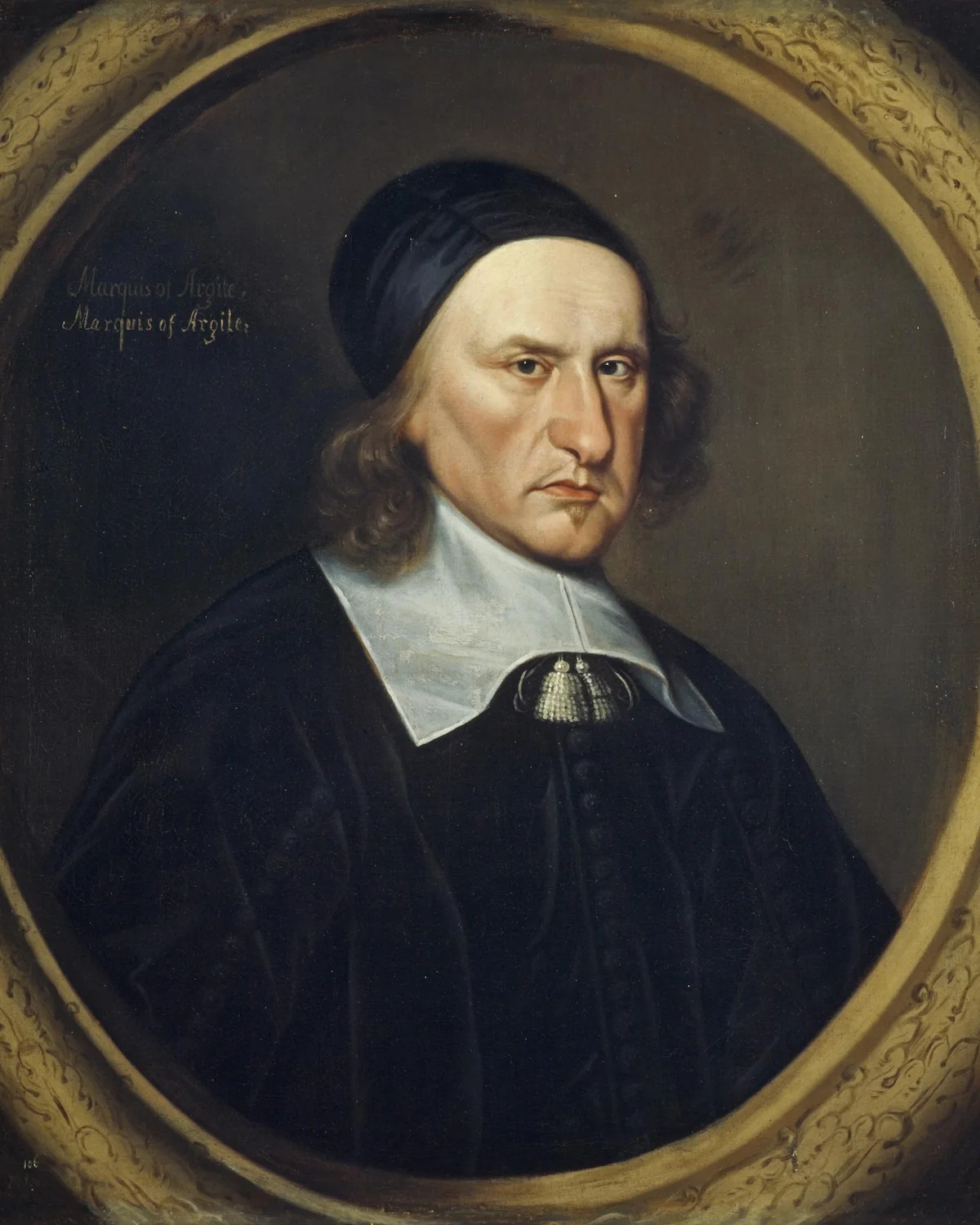
Full profiles: Alasdair MacColla: Montrose’s Irish Ally and Archibald Campbell, Marquess of Argyll: Montrose’s Nemesis (forthcoming)
The Tactic Behind the Victories: The Highland Charge
Montrose’s Highland and Irish troops fought differently from the regular armies of the period: fewer muskets, less armor, but far greater speed, both on the march and in the moment of contact. The tactic that defined his battles — a single close-range volley followed immediately by a charge with edged weapons — became known as the Highland charge, and it repeatedly broke conventional infantry lines before they could reload.
Full breakdown: What Was the Highland Charge? (forthcoming)
The Collapse: Philiphaugh and Its Aftermath
The same factor that made Montrose’s victories possible was also his greatest weakness. His highlanders fought under clan loyalties rather than regular military discipline, and after every battle — win or lose — a portion of them would simply go home, often with their plunder. After Kilsyth, this process accelerated at the worst possible moment: Montrose’s army shrank just as it should have been consolidating its position. A month later, at Philiphaugh, what remained of his forces was caught in fog and destroyed by David Leslie’s cavalry, recently recalled from England. Montrose escaped; Royalist Scotland did not survive the battle with him.
He would return once more, in 1650, in a final attempt that ended in defeat, capture, and execution in Edinburgh.
From Battlefield to Board Game
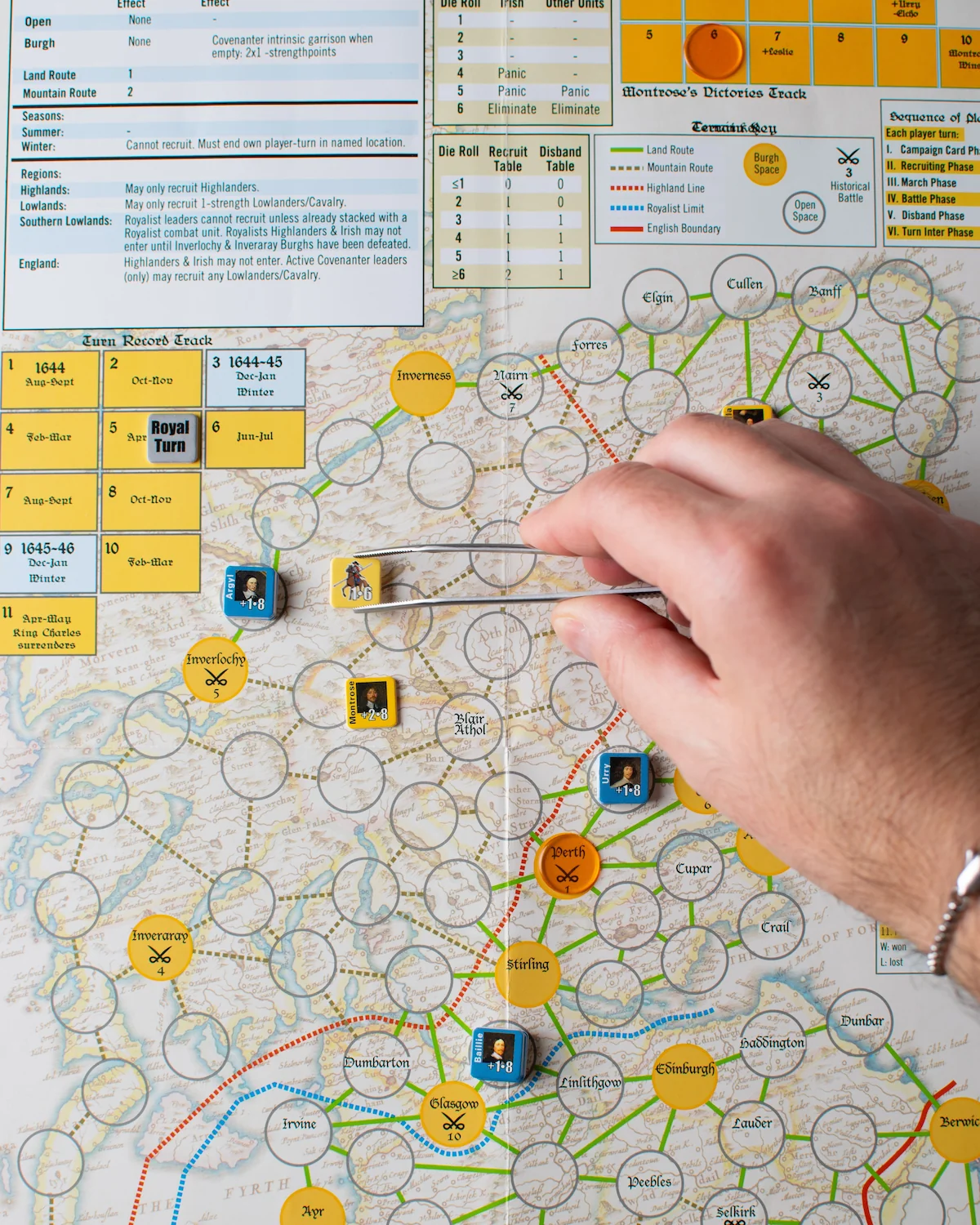
Montrose’s campaign has also found an afterlife on the tabletop. Campaigns of Montrose: A Year of Living Dangerously, 1644-1645, designed by Brendan Whyte for Decision Games, adapts the campaign into a card-driven two-player wargame — part of the small Hand of Destiny series of introductory-level historical games. Its mechanics translate some of the campaign’s defining features directly into rules: exceptional forced marches, clan desertions after battle, and the tactical edge of the Highland charge.
Full game overview: Campaigns of Montrose – Review
The wider series: The Hand of Destiny Series: A Guide to All Five Games (forthcoming)
Historical Sources & Further Reading
Montrose
Edward J. Cowan, Montrose: For Covenant and King (1977) – A modern biography of James Graham, Marquess of Montrose.
John Buchan, Montrose (1928) – A classic historical biography and winner of the James Tait Black Memorial Prize in 1928.
Dominic Pearce, The King’s Only Champion (2018) – The most recent full-length biography of Montrose.
Alasdair MacColla
David Stevenson, Highland Warrior: Alasdair MacColla and the Civil Wars (1980) – A detailed study of MacColla’s career, drawing on Gaelic prose, poetry, oral tradition and conventional historical sources.
Argyll
Allan Macinnes, The British Confederate: Archibald Campbell, Marquess of Argyll, c.1607–1661 (2011) – A detailed academic biography of one of the central Covenanter figures of the period.
The Wars of the Three Kingdoms
David Stevenson, The Scottish Revolution 1637–44 (1973) and Revolution and Counter-Revolution in Scotland 1644–51 (1977) – A two-volume study of the Scottish conflicts that provides essential background to Montrose’s campaign.
S. R. Gardiner, History of the Great Civil War – A classic late-nineteenth-century account that remains a useful chronological reference for the wider Civil Wars.
Nick Lipscombe and Martyn Bennett, Atlas of the Wars of the Three Kingdoms – A collection of 156 detailed maps placing major battles such as Naseby and Marston Moor within the wider context of the conflict.
Stuart Reid, Auldearn 1645: The Marquis of Montrose’s Scottish Campaign (Osprey Campaign 123) – A concise military history covering Montrose’s campaign from Tippermuir and Aberdeen through Inverlochy, Auldearn, and Kilsyth to the defeat at Philiphaugh.