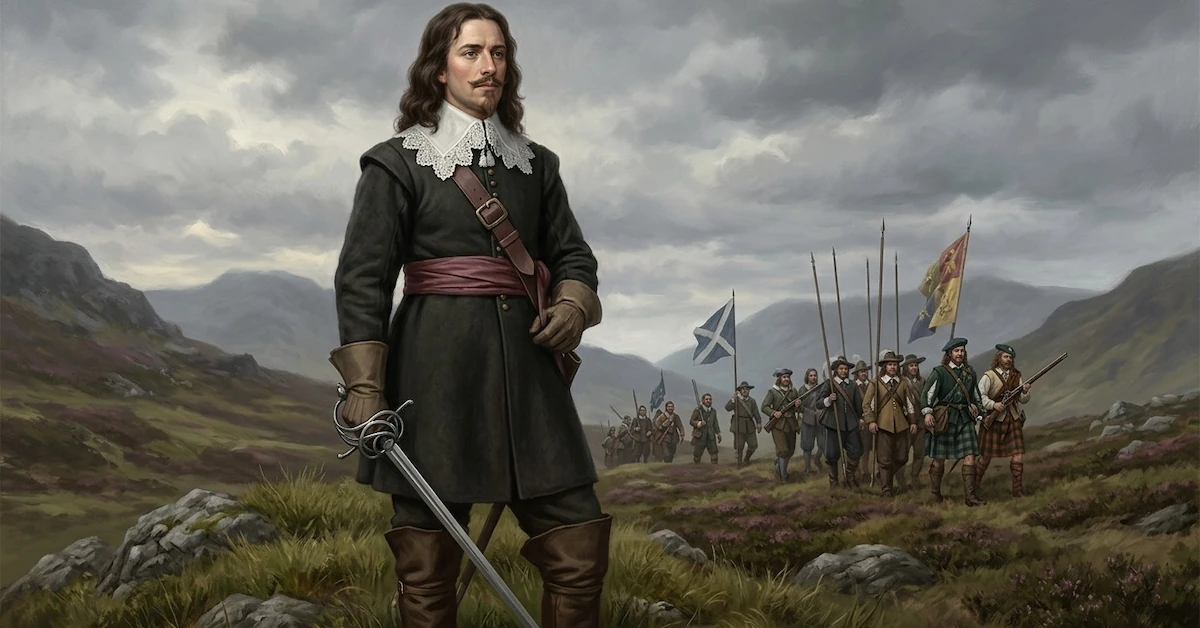
Who was the Marquess of Montrose?
James Graham, 1st Marquess of Montrose, was a Scottish nobleman, soldier, and poet who led a Royalist military campaign across Scotland in 1644-45, winning six battles in under a year before his army collapsed and, five years later, he was captured and executed. He’s remembered today as one of the most tactically gifted commanders of the Wars of the Three Kingdoms — and as a case study in how fast a military triumph can unravel once its foundations give way.
This article covers his life: how a future Royalist commander started out on the opposite side, the campaign that made him famous, and the execution that turned him into a legend.
What You’ll Find Here
Early Life and the National Covenant
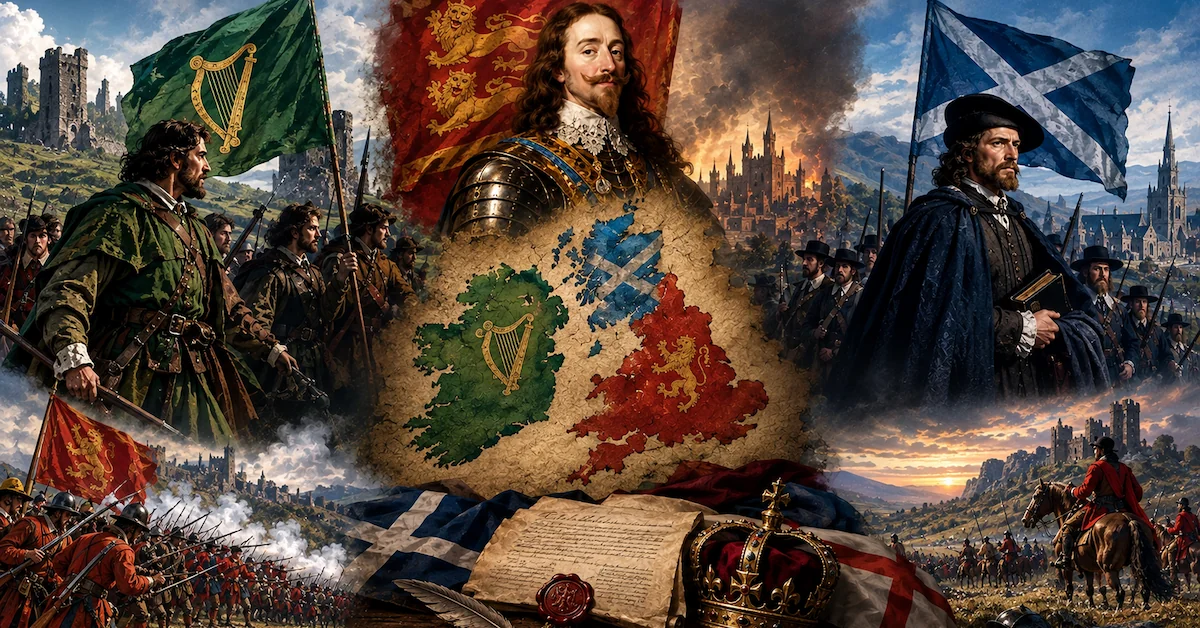
Montrose was born in 1612 into one of Scotland’s leading noble families. Like most of the Scottish nobility of his generation, his early political life was shaped by the growing conflict between Charles I and his Scottish subjects over the king’s attempts to impose religious changes on the Church of Scotland.
In 1638, Montrose was among the first signatories of the National Covenant, the pact committing its signers to defend the Presbyterian Church of Scotland against royal interference. He wasn’t a bystander to the cause, either — in the Bishops’ Wars that followed, he served as a Covenanter military commander against the king.
Breaking with the Covenanters
By the early 1640s, Montrose had grown convinced that the Covenanter movement had changed character. What had started as a defense of Scottish religious and political liberties was, in his reading, becoming the vehicle for the personal power of a small group of nobles — chief among them Archibald Campbell, Marquess of Argyll, who by this point dominated the Covenanter government.
Montrose switched to the king’s side in 1643. It cost him almost everything in social terms: former allies became enemies, and in the eyes of the Covenanter regime, he was now a traitor to be hunted down.
Lieutenant-General for Charles I
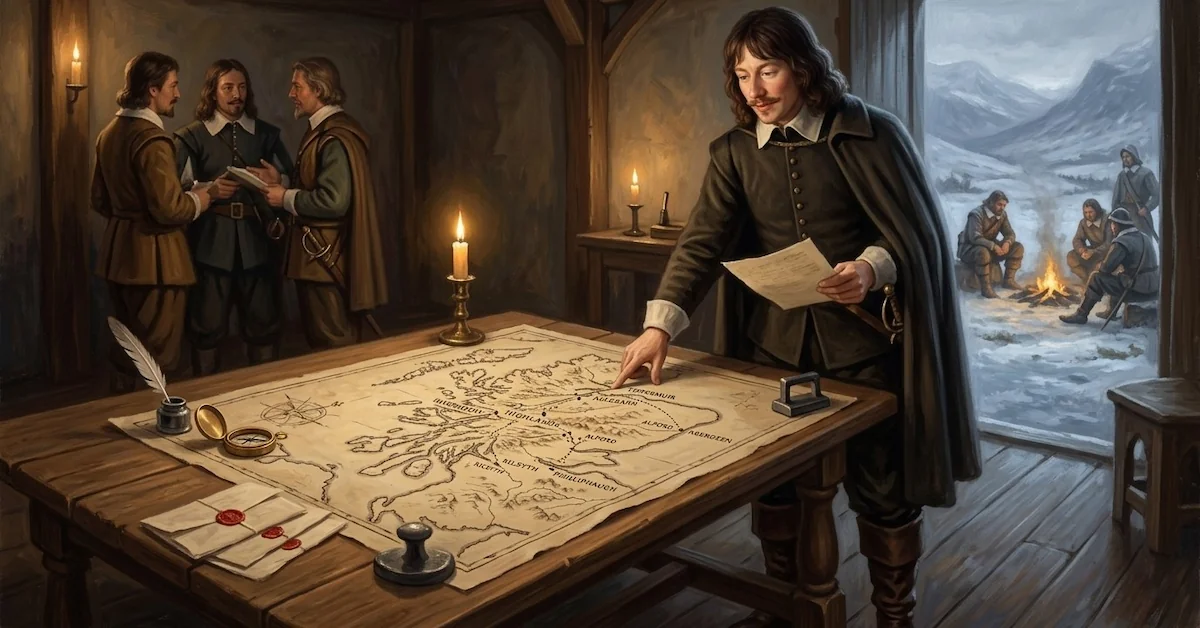
Charles I gave Montrose a commission as his lieutenant-general in Scotland, along with a brief that bordered on the impossible: raise the country against a government that controlled nearly every institution within it, using an army that didn’t yet exist, in a kingdom where the overwhelming majority considered his cause hostile.
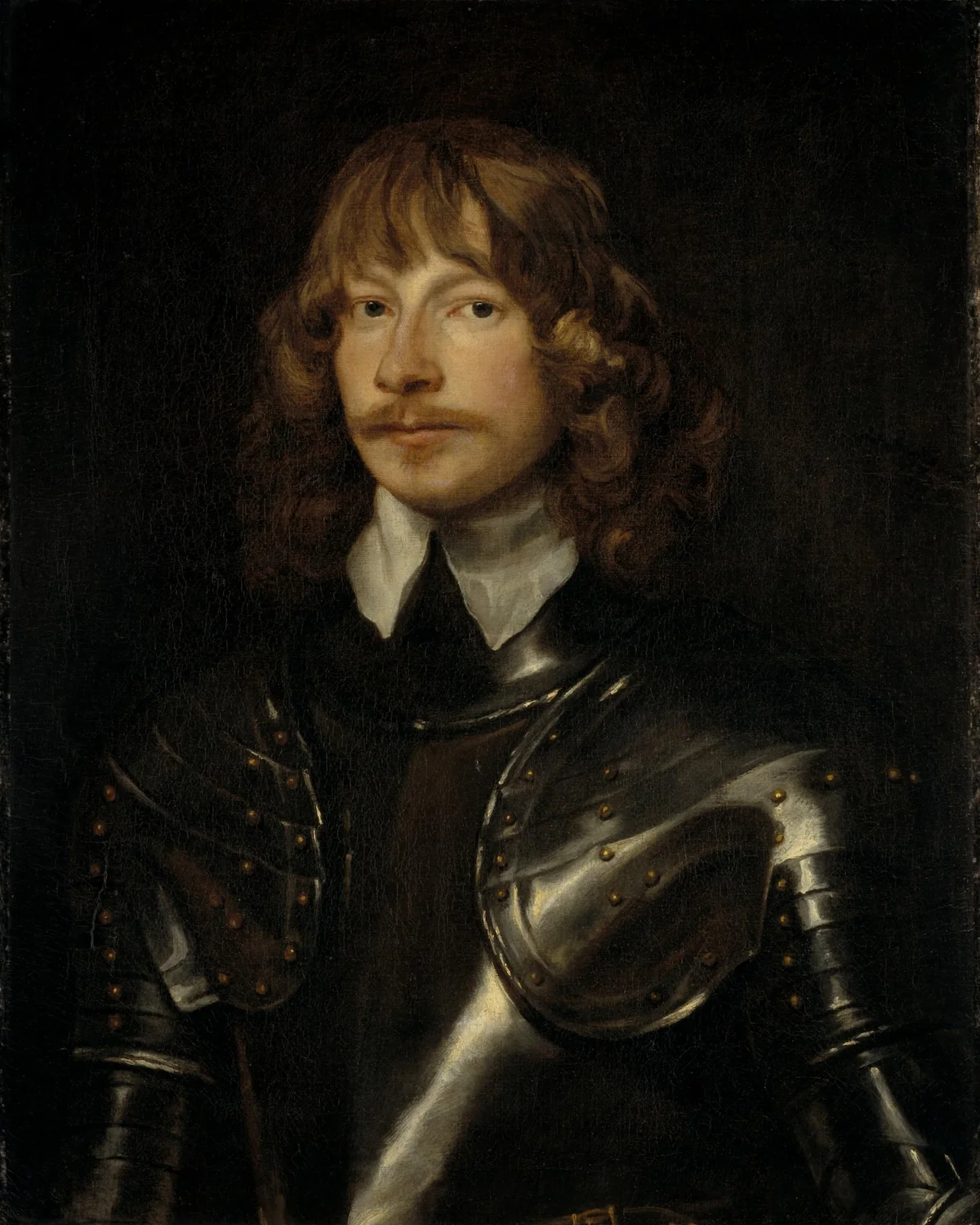
The Year That Made Him Famous (1644-45)
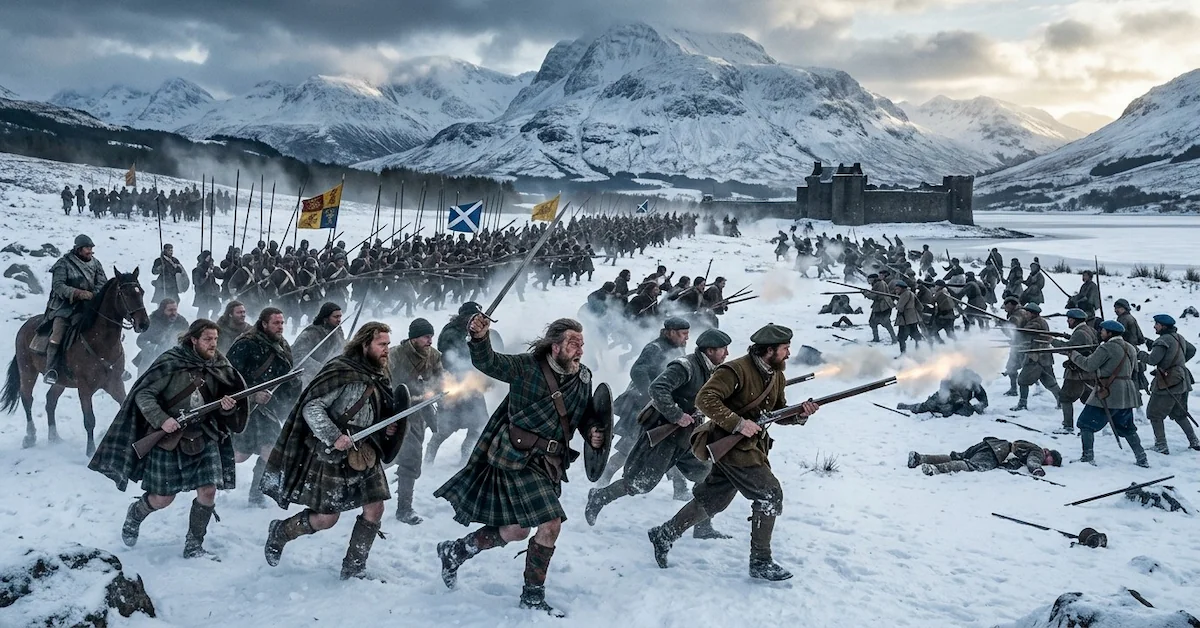
Between September 1644 and September 1645, Montrose delivered on that brief in spectacular fashion. Leading a mixed force of Scottish highlanders and Irish Confederate troops under Alasdair MacColla, he won six consecutive battles — Tippermuir, Aberdeen, Inverlochy, Auldearn, Alford, and Kilsyth — usually against larger and better-equipped Covenanter armies. After Kilsyth, Scotland was, for the only time in the entire British civil wars, effectively under Royalist control.
The collapse, when it came, was just as fast. A month after Kilsyth, at Philiphaugh, what remained of his depleted force was caught by surprise and destroyed by David Leslie’s professional cavalry, recently recalled from England.
Full breakdown of each engagement: The Seven Battles of Montrose’s Campaign (forthcoming)
Poet as Well as Soldier
Montrose wasn’t only a military commander — he was also a poet, and not an incidental one. His verse, written both before the campaign and in its aftermath, is still anthologized today by sources like the Poetry Foundation and the Scottish Poetry Library, and it captures a preoccupation with fate, risk, and honor that runs through his entire career.
Capture and Execution (1650)
Montrose’s story didn’t end at Philiphaugh. He escaped to the Continent, but returned to Scotland in 1650 to fight for the exiled Charles II. The attempt failed almost immediately: defeated at Carbisdale, he was betrayed, captured, and brought to Edinburgh for trial.
He was executed on 21 May 1650. According to historian Richard Cavendish’s account for History Today, on the morning of his execution Montrose carefully combed out his long hair; when a Presbyterian minister rebuked him for such vanity at a moment like this, Montrose is said to have replied, “My head is still my own.” His body was then dismembered, with the limbs sent for public display in Stirling, Aberdeen, Perth, and Glasgow, and his head fixed on a spike above the Edinburgh Tolbooth — where it remained for eleven years, until the Restoration allowed his remains to be gathered for a state funeral in 1661, paid for by the same crown he had died serving.
Why Montrose Still Matters
Montrose’s career is often read as a study in contrasts: a former Covenanter who became the Covenanters’ most dangerous enemy, a commander who compensated for a permanent shortage of resources with speed and initiative, and a man whose greatest victory was also the beginning of his fastest collapse. That combination — spectacular success built on foundations too fragile to hold it — is a large part of why his campaign is still studied today, both by historians and, more recently, by wargame designers looking to translate it into rules.
Discover the full story of Montrose’s 1644–45 campaign, from his battlefield victories to its tabletop simulation, in the Complete Guide.